

Bumthang ‘𝘔â𝘵𝘩𝘳𝘢 literally means “red pattern from Bumthang” and is closely associated with Bumthang district in Bhutan and hence the name. Traditionally woven from wool, the textile is distinguished by its dominant red color with subtle striped patterns. Its woolen material makes it particularly suitable for the colder climate of the Bumthang region, where warm and durable fabrics have long been valued for everyday use.
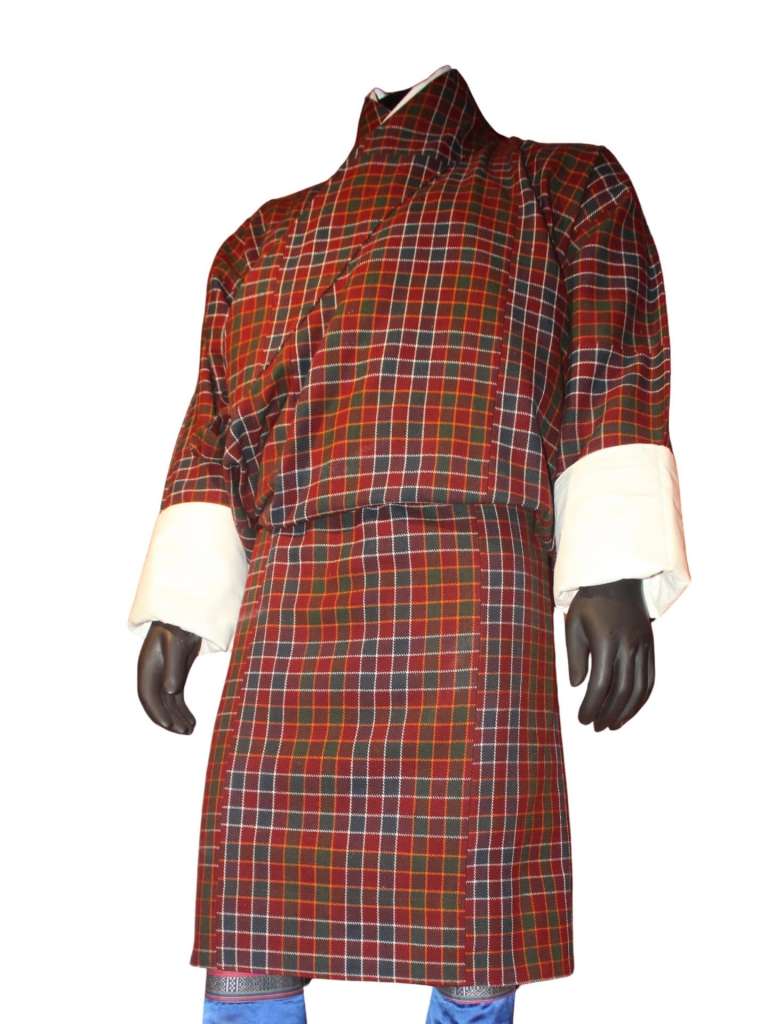
Several types of Bumthang ‘𝘔â𝘵𝘩𝘳𝘢 textiles are woven in the region, including 𝘊𝘩𝘪𝘨𝘵𝘩𝘳𝘢, 𝘋𝘩𝘰𝘳𝘴𝘩𝘰𝘯𝘨𝘣𝘢, and 𝘒𝘦𝘮𝘱𝘢. The names of these patterns reflect their structural characteristics. 𝘊𝘩𝘪𝘨𝘵𝘩𝘳𝘢 literally means “one pattern”, while 𝘋𝘩𝘰𝘳𝘴𝘩𝘰𝘯𝘨𝘣𝘢 derives from the word dho, meaning “two” when counting numbers, indicating the presence of two patterns. 𝘒𝘦𝘮𝘱𝘢 is named after a tong-like handheld utensil with two arms joined at one end, symbolizing patterns that appear connected or attached.
Weavers also combine these designs to create composite textiles. 𝘋𝘩𝘰𝘳𝘴𝘩𝘰𝘯𝘨𝘣𝘢 𝘒𝘦𝘮𝘱𝘢 incorporates both the 𝘋𝘩𝘰𝘳𝘴𝘩𝘰𝘯𝘨𝘣𝘢 and 𝘒𝘦𝘮𝘱𝘢 patterns within a fabric, while 𝘊𝘩𝘪𝘨𝘵𝘩𝘳𝘢 𝘒𝘦𝘮𝘱𝘢 combines the 𝘊𝘩𝘪𝘨𝘵𝘩𝘳𝘢 and 𝘒𝘦𝘮𝘱𝘢 patterns. These variations reflect the adaptability of pattern arrangements within Bumthang ‘𝘔â𝘵𝘩𝘳𝘢 textiles.
The information presented here is based on oral accounts and traditional knowledge from the Bumthang region.
𝘐𝘯 𝘵𝘩𝘪𝘴 𝘴𝘦𝘳𝘪𝘦𝘴, 𝘸𝘦 𝘩𝘪𝘨𝘩𝘭𝘪𝘨𝘩𝘵 𝘪𝘯𝘵𝘦𝘳𝘦𝘴𝘵𝘪𝘯𝘨 𝘰𝘣𝘫𝘦𝘤𝘵𝘴 𝘧𝘳𝘰𝘮 𝘰𝘶𝘳 𝘤𝘰𝘭𝘭𝘦𝘤𝘵𝘪𝘰𝘯 𝘢𝘴 𝘸𝘦𝘭𝘭 𝘢𝘴 𝘯𝘰𝘵𝘢𝘣𝘭𝘦 𝘭𝘢𝘯𝘥𝘴𝘤𝘢𝘱𝘦 𝘧𝘦𝘢𝘵𝘶𝘳𝘦𝘴 𝘢𝘳𝘰𝘶𝘯𝘥 𝘵𝘩𝘦 𝘞𝘢𝘯𝘨𝘥𝘶𝘦𝘤𝘩𝘩𝘰𝘦𝘭𝘪𝘯𝘨 𝘗𝘢𝘭𝘢𝘤𝘦, 𝘴𝘩𝘢𝘳𝘪𝘯𝘨 𝘵𝘩𝘦 𝘴𝘵𝘰𝘳𝘪𝘦𝘴 𝘢𝘯𝘥 𝘩𝘦𝘳𝘪𝘵𝘢𝘨𝘦 𝘣𝘦𝘩𝘪𝘯𝘥 𝘵𝘩𝘦𝘮.