

Portable shrines carried by wandering monks are a characteristic feature of the Himalayan Buddhist world, found across Bhutan, Tibet, Nepal, and Ladakh. In Bhutan, travelling monks known as 𝘮𝘢𝘯𝘪𝘱 carried these shrines from village to village, opening their many doors while chanting prayers and recounting Buddhist narratives and moral teachings.
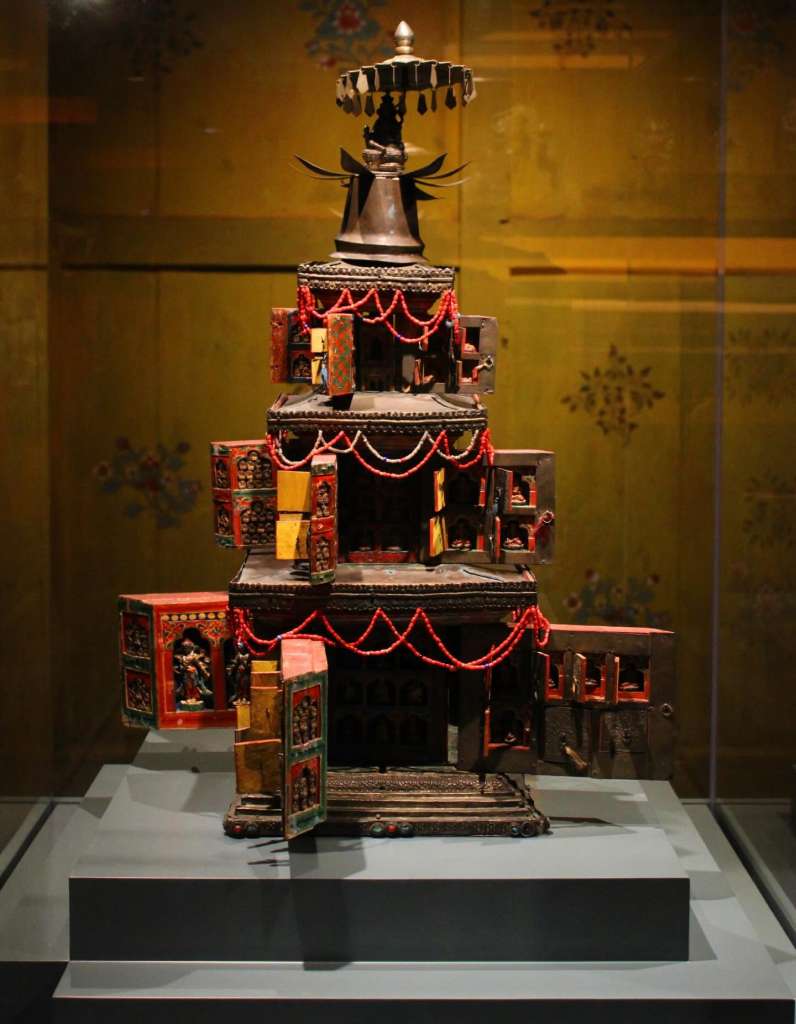
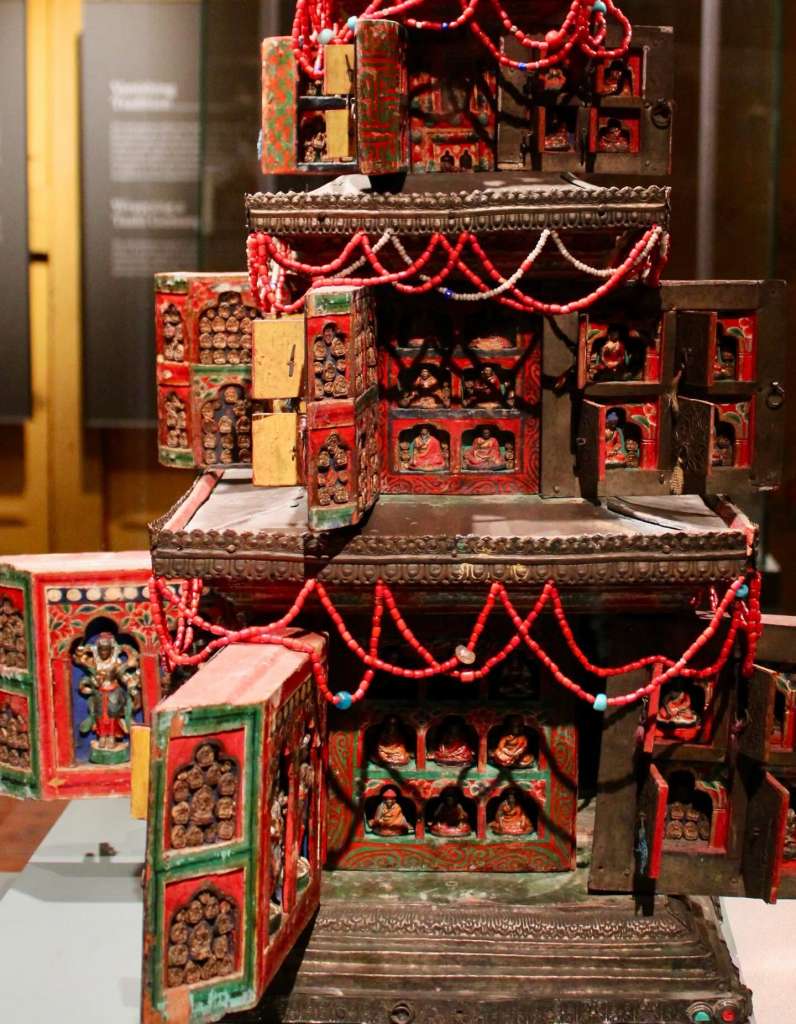
Meaning “many auspicious doors,” the 𝘛𝘢𝘴𝘩𝘪 𝘎𝘰𝘮𝘢𝘯𝘨 is a portable shrine composed of opening compartments that reveal miniature images of buddhas, bodhisattvas, saints, and protective deities. Resembling a miniature temple facade, it was never intended as a static object. It was made to travel through landscapes and communities as part of a living culture of Buddhist teaching.
The shrine displayed at Wangduechhoeling Palace Museum and Cultural Centre preserves traces of this mobile ritual tradition. 𝘛𝘢𝘴𝘩𝘪 𝘎𝘰𝘮𝘢𝘯𝘨 were traditionally housed within wooden carrying boxes that also functioned as display mounts, wrapped in ceremonial woven textiles known as 𝘯𝘢𝘮𝘻𝘢 and secured with handwoven 𝘬𝘦𝘳𝘢 belts. Leather straps attached to these cases allowed the shrines to be carried across Bhutan’s mountainous terrain by travelling 𝘮𝘢𝘯𝘪𝘱. The textile displayed alongside this shrine is part of that ceremonial tradition, offering a glimpse into how such objects were protected, transported, and presented during performances.
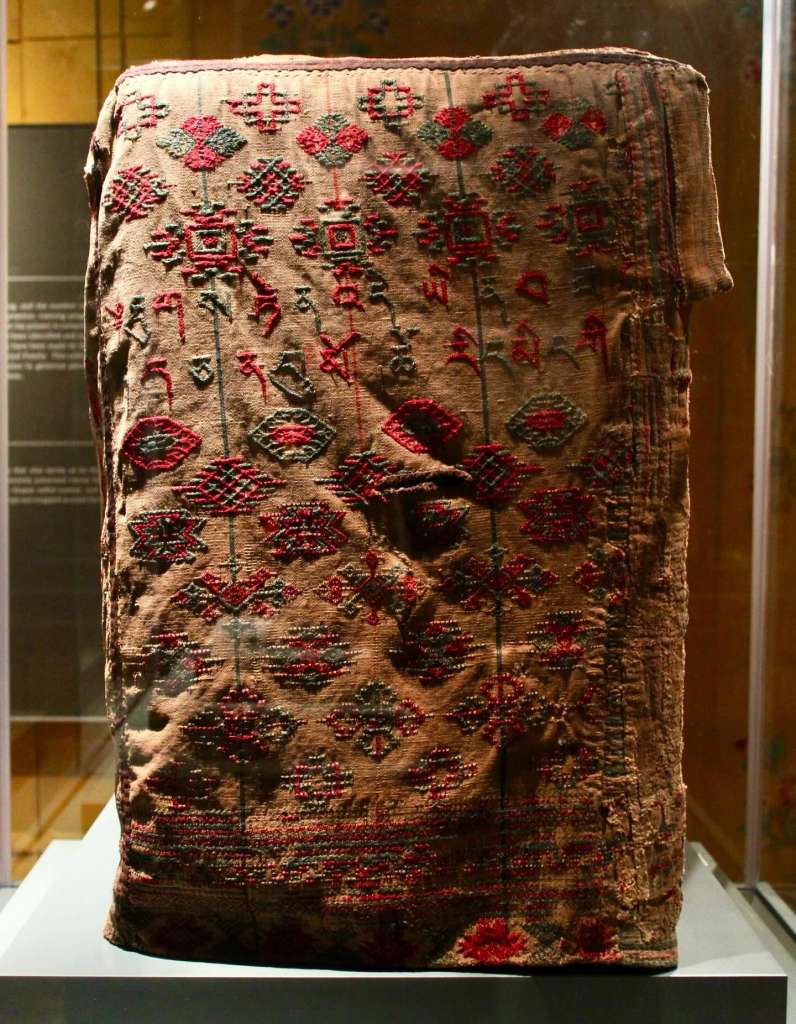
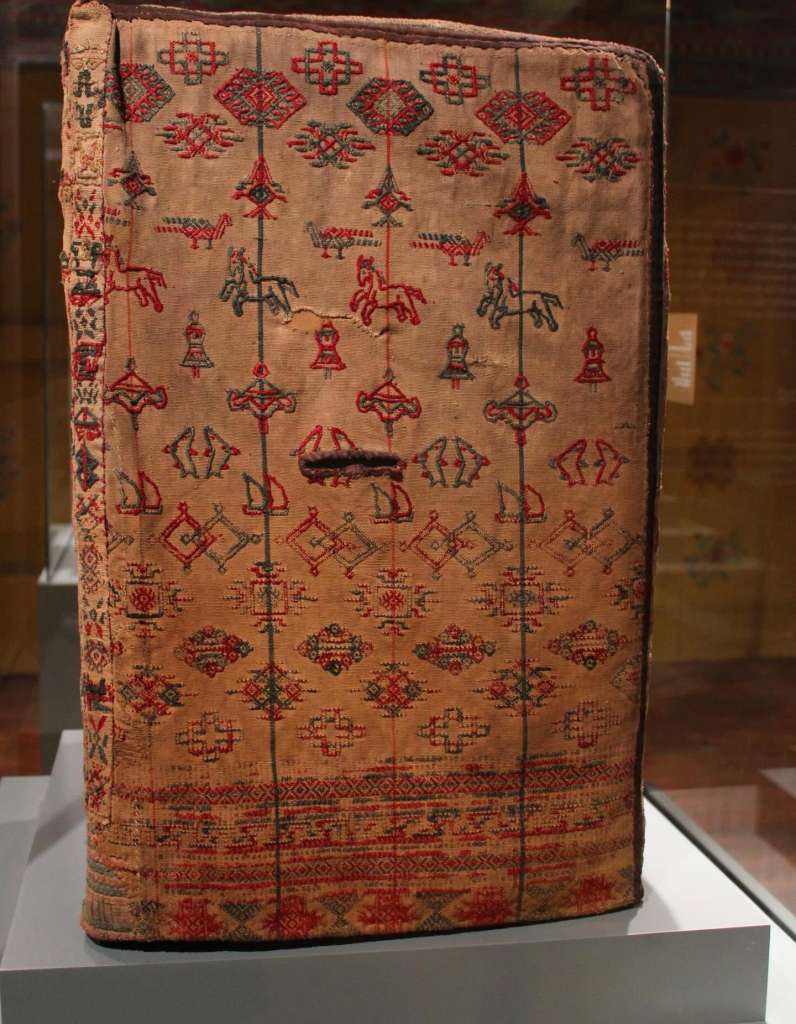
Today, the 𝘛𝘢𝘴𝘩𝘪 𝘎𝘰𝘮𝘢𝘯𝘨 tradition survives only in limited form and the number of practicing manip declined significantly over the twentieth century. Efforts led by Her Majesty Royal Grandmother Ashi Kesang Choeden Wangchuck, the Royal Government of Bhutan, and the Tashi Gomang Project have sought to revitalize the tradition through documentation, conservation, and the training of a new generation of 𝘨𝘰𝘮𝘤𝘩𝘦𝘯 as 𝘮𝘢𝘯𝘪𝘱. These initiatives recognize the 𝘛𝘢𝘴𝘩𝘪 𝘎𝘰𝘮𝘢𝘯𝘨 not simply as an artefact, but as part of a wider cultural practice encompassing storytelling, ritual performance, craftsmanship, and Buddhist teaching.
The 𝘛𝘢𝘴𝘩𝘪 𝘎𝘰𝘮𝘢𝘯𝘨 displayed here stands as a reminder of a time when Buddhist teachings moved through the Himalayan landscape carried by travelling 𝘮𝘢𝘯𝘪𝘱, unfolding door by door before gathered communities.
𝘐𝘯 𝘵𝘩𝘪𝘴 𝘴𝘦𝘳𝘪𝘦𝘴, 𝘸𝘦 𝘩𝘪𝘨𝘩𝘭𝘪𝘨𝘩𝘵 𝘪𝘯𝘵𝘦𝘳𝘦𝘴𝘵𝘪𝘯𝘨 𝘰𝘣𝘫𝘦𝘤𝘵𝘴 𝘧𝘳𝘰𝘮 𝘰𝘶𝘳 𝘤𝘰𝘭𝘭𝘦𝘤𝘵𝘪𝘰𝘯 𝘢𝘴 𝘸𝘦𝘭𝘭 𝘢𝘴 𝘯𝘰𝘵𝘢𝘣𝘭𝘦 𝘭𝘢𝘯𝘥𝘴𝘤𝘢𝘱𝘦 𝘧𝘦𝘢𝘵𝘶𝘳𝘦𝘴 𝘢𝘳𝘰𝘶𝘯𝘥 𝘵𝘩𝘦 𝘞𝘢𝘯𝘨𝘥𝘶𝘦𝘤𝘩𝘩𝘰𝘦𝘭𝘪𝘯𝘨 𝘗𝘢𝘭𝘢𝘤𝘦, 𝘴𝘩𝘢𝘳𝘪𝘯𝘨 𝘵𝘩𝘦 𝘴𝘵𝘰𝘳𝘪𝘦𝘴 𝘢𝘯𝘥 𝘩𝘦𝘳𝘪𝘵𝘢𝘨𝘦 𝘣𝘦𝘩𝘪𝘯𝘥 𝘵𝘩𝘦𝘮.