

This clay statue of Hayagriva is part of the King’s chamber gallery at the Wangduechhoeling Palace Museum and Cultural Centre, based on figures that formed the shrine of the monarch’s meditational deities, 𝘺𝘪𝘥𝘢𝘮. It is made through 𝘫𝘪𝘯𝘻𝘰, one of Bhutan’s oldest sculptural practices. The surface is left largely unpainted, with the horse head, face, and ritual elements highlighted in gold.
Hayagriva, known as Tandin in Himalayan Buddhism, literally means “horse-headed” or “horse-necked,” from 𝘩𝘢𝘺𝘢 (horse) and 𝘨𝘳ī𝘷𝘢 (neck). The horse head rising from the crown is the defining feature. It is associated with the neigh as awakened speech, understood as a force that cuts through ignorance, shifts perception, and subdues what obstructs.
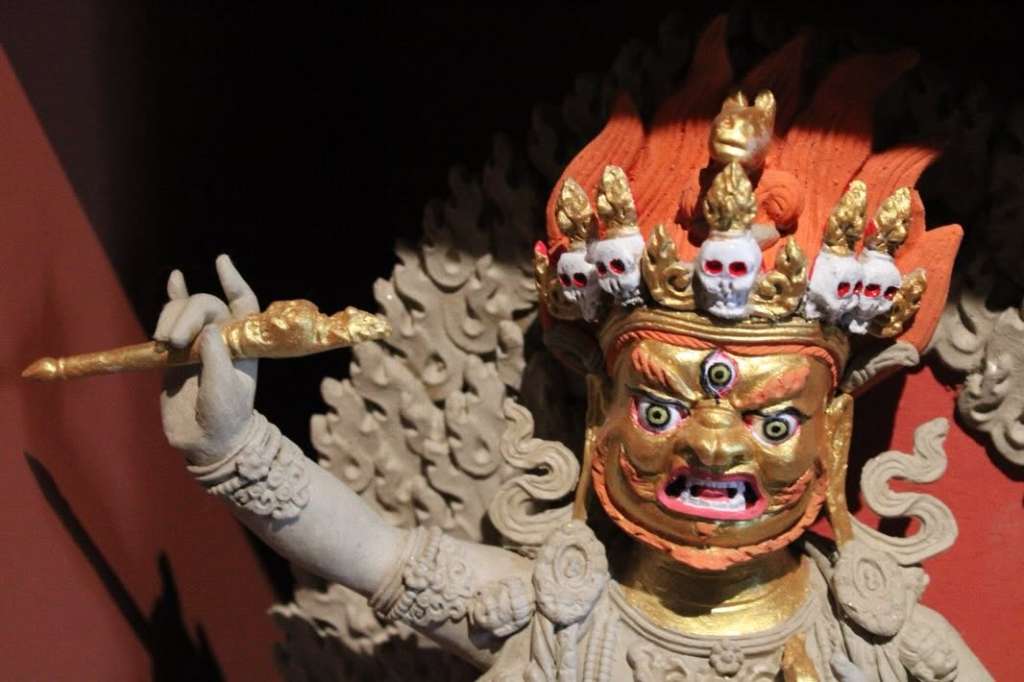
When Trongsa Pönlop Jigme Namgyel was troubled by a malevolent spirit, Lama Jangchub Tsündrü advised him to take up the practice of Hayagriva as a protective deity. In this context, Hayagriva is understood as a wrathful emanation of Buddha Akshobhya (𝘔𝘪𝘵𝘩𝘳𝘶𝘬𝘱𝘢), the “Unshakeable,” and is also associated with Avalokiteshvara (𝘊𝘩𝘦𝘯𝘳𝘦𝘻𝘪). He is invoked as a remover of obstacles and is said to announce his presence through a piercing neigh that unsettles and overcomes harmful forces even before he appears.
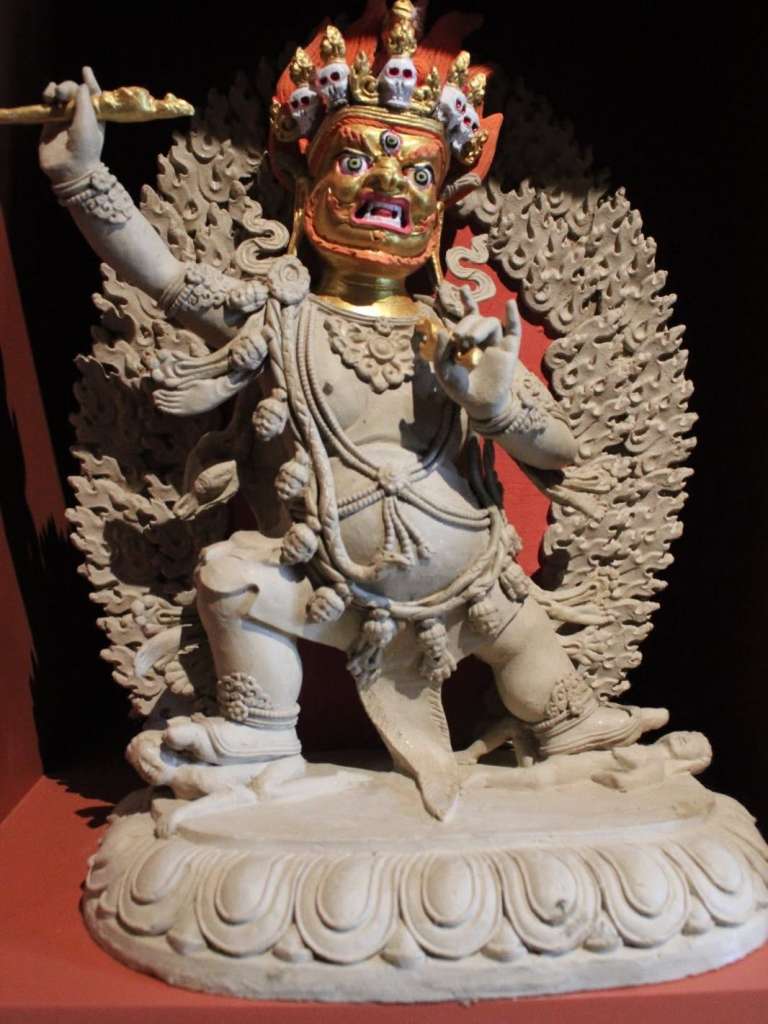
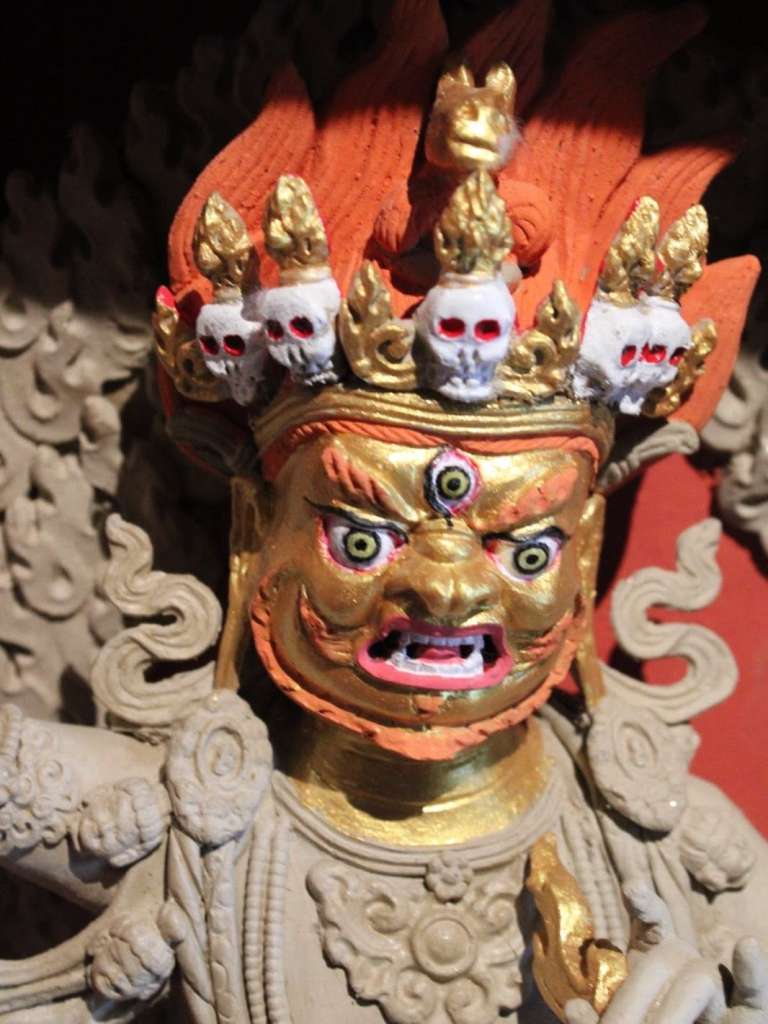
This form also carries a philosophical meaning tied to the path toward enlightenment. The sound is understood to break through false illusions. What is encountered as an external threat is also recognized as something shaped by the mind. As that dissolves, a different clarity becomes possible. The forceful features of Hayagriva are not incidental, but tied to this act of confronting and cutting through both inner and outer obstacles.
𝘐𝘯 𝘵𝘩𝘪𝘴 𝘴𝘦𝘳𝘪𝘦𝘴, 𝘸𝘦 𝘩𝘪𝘨𝘩𝘭𝘪𝘨𝘩𝘵 𝘪𝘯𝘵𝘦𝘳𝘦𝘴𝘵𝘪𝘯𝘨 𝘰𝘣𝘫𝘦𝘤𝘵𝘴 𝘧𝘳𝘰𝘮 𝘰𝘶𝘳 𝘤𝘰𝘭𝘭𝘦𝘤𝘵𝘪𝘰𝘯 𝘢𝘴 𝘸𝘦𝘭𝘭 𝘢𝘴 𝘯𝘰𝘵𝘢𝘣𝘭𝘦 𝘭𝘢𝘯𝘥𝘴𝘤𝘢𝘱𝘦 𝘧𝘦𝘢𝘵𝘶𝘳𝘦𝘴 𝘢𝘳𝘰𝘶𝘯𝘥 𝘵𝘩𝘦 𝘞𝘢𝘯𝘨𝘥𝘶𝘦𝘤𝘩𝘩𝘰𝘦𝘭𝘪𝘯𝘨 𝘗𝘢𝘭𝘢𝘤𝘦, 𝘴𝘩𝘢𝘳𝘪𝘯𝘨 𝘵𝘩𝘦 𝘴𝘵𝘰𝘳𝘪𝘦𝘴 𝘢𝘯𝘥 𝘩𝘦𝘳𝘪𝘵𝘢𝘨𝘦 𝘣𝘦𝘩𝘪𝘯𝘥 𝘵𝘩𝘦𝘮.