

Among the many humble tools of the past, the 𝘳𝘢𝘯𝘨𝘵𝘩𝘢 stands out as a quiet symbol of everyday resilience. A 𝘳𝘢𝘯𝘨𝘵𝘩𝘢 is a simple yet ingenious hand-operated mill, made of two stone slabs, the lower stone fixed in place, and the upper stone rotated by hand. Grains such as wheat, barley, or maize were fed through a small central hole and ground into flour through steady, circular motion. This process was not just a chore, but a daily ritual that sustained households and connected people closely to their food.
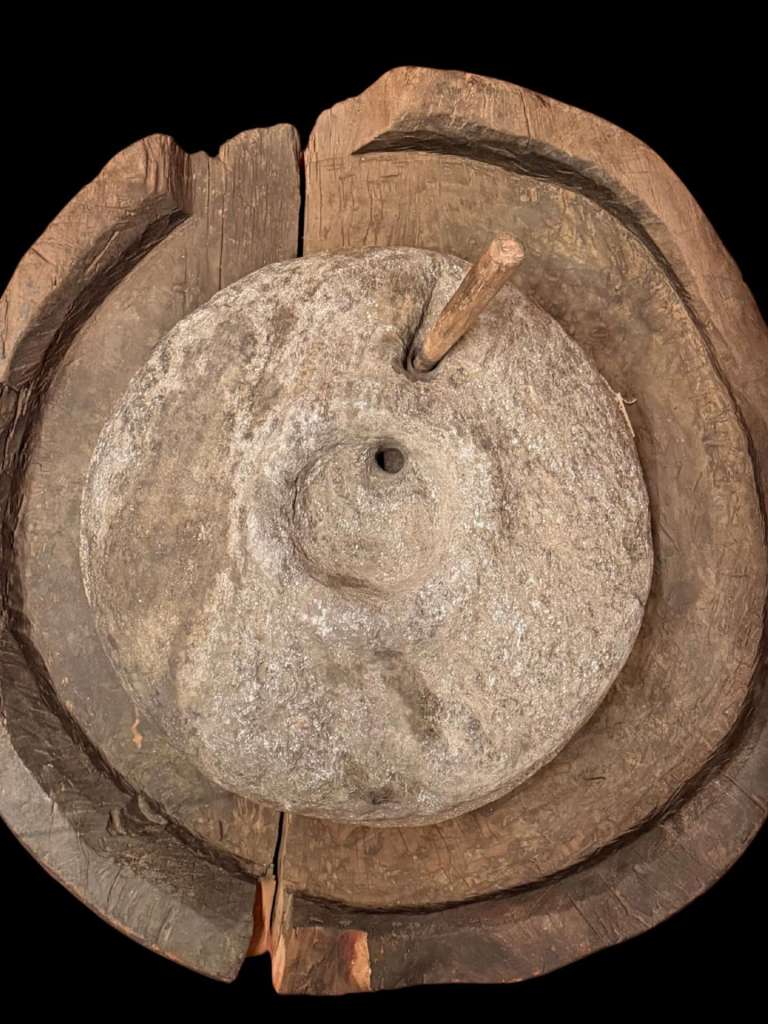
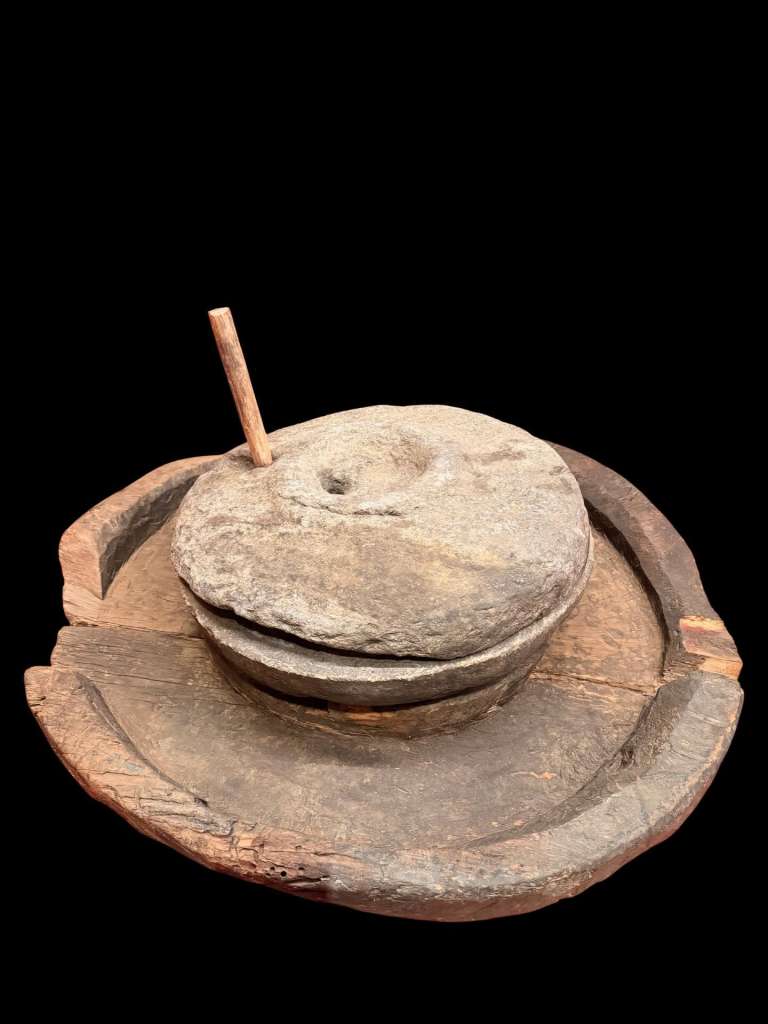
Dating back to the Neolithic period, querns were among the earliest tools that supported settled agricultural life. Over generations, they evolved from basic saddle querns where grain was crushed with a rubbing motion to rotary querns, which made grinding more efficient and less labor intensive. Despite the later introduction of watermills and mechanical grinders, querns remained in use in many rural areas due to their simplicity, durability, and independence from external power sources.
In places like Wangduechhoeling Palace, the 𝘳𝘢𝘯𝘨𝘵𝘩𝘢 is more than just an object on display, it is a storyteller. It speaks of early mornings, rhythmic movement, and the vital role of food preparation in Bhutanese households. Even in its stillness today, the quern echoes a time when life moved at the pace of human hands, grounded in tradition and self-sufficiency.
𝘐𝘯 𝘵𝘩𝘪𝘴 𝘴𝘦𝘳𝘪𝘦𝘴, 𝘸𝘦 𝘩𝘪𝘨𝘩𝘭𝘪𝘨𝘩𝘵 𝘪𝘯𝘵𝘦𝘳𝘦𝘴𝘵𝘪𝘯𝘨 𝘰𝘣𝘫𝘦𝘤𝘵𝘴 𝘧𝘳𝘰𝘮 𝘰𝘶𝘳 𝘤𝘰𝘭𝘭𝘦𝘤𝘵𝘪𝘰𝘯 𝘢𝘴 𝘸𝘦𝘭𝘭 𝘢𝘴 𝘯𝘰𝘵𝘢𝘣𝘭𝘦 𝘭𝘢𝘯𝘥𝘴𝘤𝘢𝘱𝘦 𝘧𝘦𝘢𝘵𝘶𝘳𝘦𝘴 𝘢𝘳𝘰𝘶𝘯𝘥 𝘵𝘩𝘦 𝘞𝘢𝘯𝘨𝘥𝘶𝘦𝘤𝘩𝘩𝘰𝘦𝘭𝘪𝘯𝘨 𝘗𝘢𝘭𝘢𝘤𝘦, 𝘴𝘩𝘢𝘳𝘪𝘯𝘨 𝘵𝘩𝘦 𝘴𝘵𝘰𝘳𝘪𝘦𝘴 𝘢𝘯𝘥 𝘩𝘦𝘳𝘪𝘵𝘢𝘨𝘦 𝘣𝘦𝘩𝘪𝘯𝘥 𝘵𝘩𝘦𝘮.