

Zhabdrung Ngawang Namgyel (1594–1651), the founding father of Bhutan, established 𝘊𝘩ö𝘴𝘪 ‘𝘕𝘺𝘪𝘥𝘦𝘯, the dual system of governance, integrating secular/temporal and spiritual authority within the Bhutanese state. Under this system, secular administration (𝘚𝘪) was entrusted to the Druk Desi, while religious authority (𝘊𝘩ö) was vested in the Je Khenpo, the head of the monastic order.
This system of governance remained in place until 1907, when Bhutan transitioned to a hereditary monarchy. The change was formalized through the signing of the historic 𝘎𝘦𝘯𝘫𝘢 (Contract) at the Punakha Dzong, marking the unanimous recognition of Gongsar Ugyen Wangchuck as the First Hereditary Druk Gyalpo.
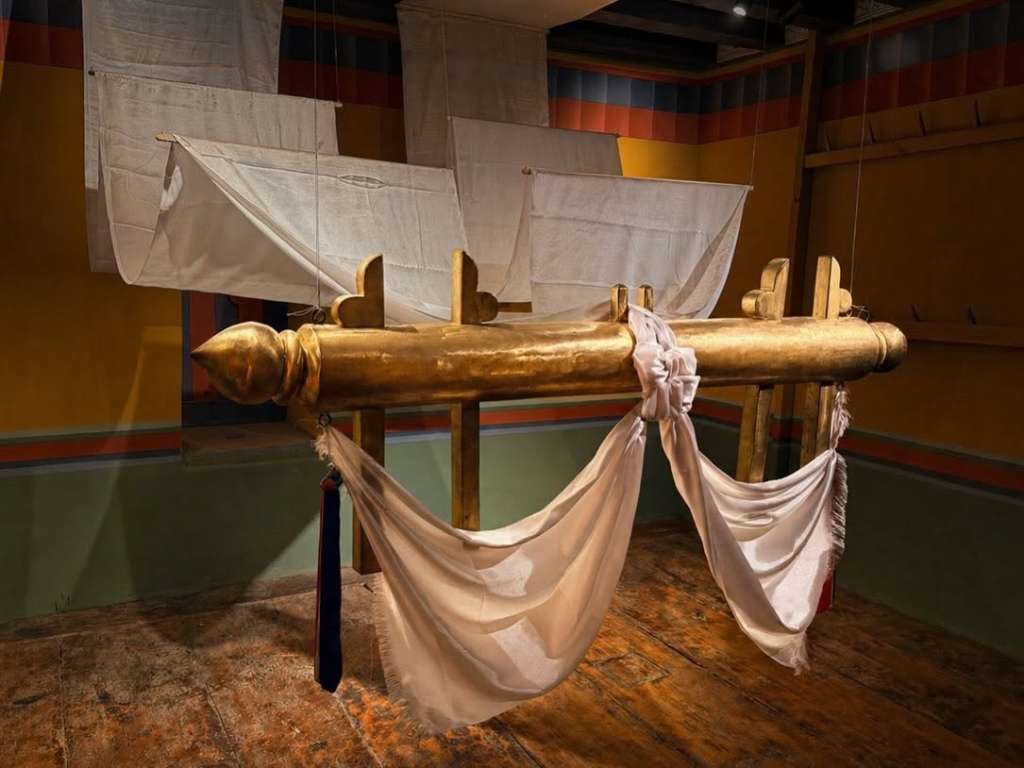
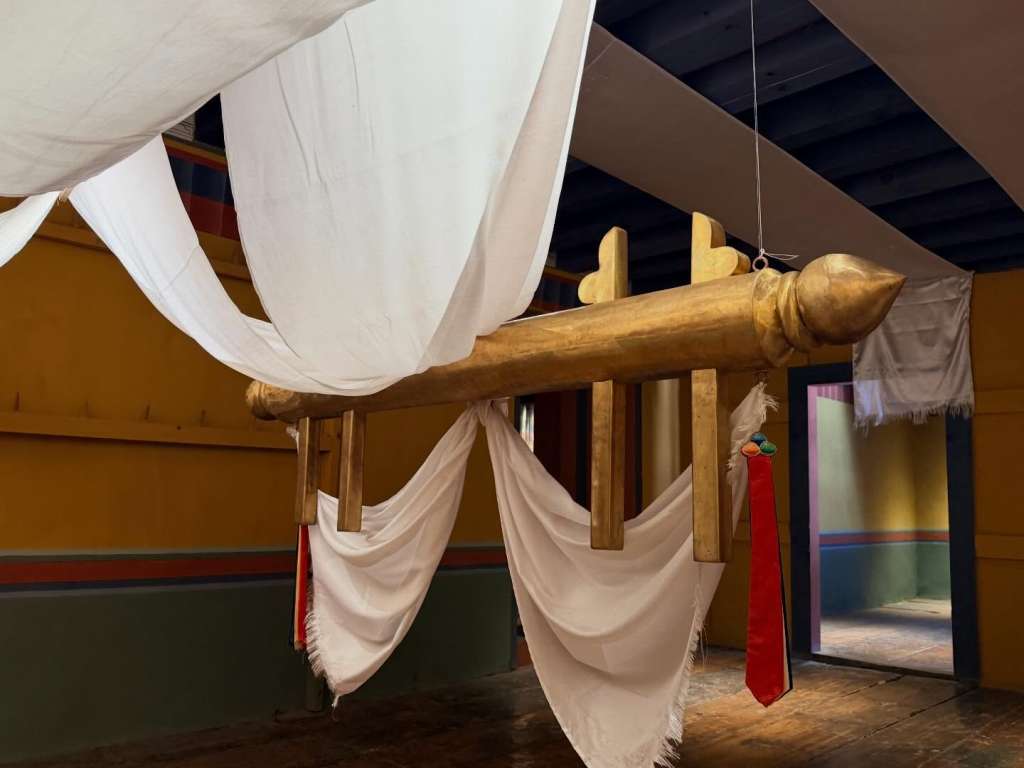
The dual system is symbolically represented by a white silk scarf wrapped and knotted over a golden yoke. The silk scarf and knot, known as 𝘥𝘩â𝘨𝘪 𝘥ü𝘱𝘩ü, signify spiritual law: the knot, initially loose, tightens with the accumulation of negative deeds. The golden yoke, known as 𝘴𝘦𝘳𝘨𝘪 ‘𝘯𝘺𝘢𝘴𝘩𝘪𝘯𝘨, represents secular law, which grows heavier in proportion to the gravity of crimes committed.
This emblematic motif continues to hold enduring significance and is incorporated into the logo of Bhutan’s Royal Court of Justice.
𝘐𝘯 𝘵𝘩𝘪𝘴 𝘴𝘦𝘳𝘪𝘦𝘴, 𝘸𝘦 𝘩𝘪𝘨𝘩𝘭𝘪𝘨𝘩𝘵 𝘪𝘯𝘵𝘦𝘳𝘦𝘴𝘵𝘪𝘯𝘨 𝘰𝘣𝘫𝘦𝘤𝘵𝘴 𝘧𝘳𝘰𝘮 𝘰𝘶𝘳 𝘤𝘰𝘭𝘭𝘦𝘤𝘵𝘪𝘰𝘯 𝘢𝘴 𝘸𝘦𝘭𝘭 𝘢𝘴 𝘯𝘰𝘵𝘢𝘣𝘭𝘦 𝘭𝘢𝘯𝘥𝘴𝘤𝘢𝘱𝘦 𝘧𝘦𝘢𝘵𝘶𝘳𝘦𝘴 𝘢𝘳𝘰𝘶𝘯𝘥 𝘵𝘩𝘦 𝘞𝘢𝘯𝘨𝘥𝘶𝘦𝘤𝘩𝘩𝘰𝘦𝘭𝘪𝘯𝘨 𝘗𝘢𝘭𝘢𝘤𝘦, 𝘴𝘩𝘢𝘳𝘪𝘯𝘨 𝘵𝘩𝘦 𝘴𝘵𝘰𝘳𝘪𝘦𝘴 𝘢𝘯𝘥 𝘩𝘦𝘳𝘪𝘵𝘢𝘨𝘦 𝘣𝘦𝘩𝘪𝘯𝘥 𝘵𝘩𝘦𝘮.