

The 𝘬𝘢𝘯𝘨𝘥𝘶𝘯𝘨, or thighbone trumpet, is used in the Himalayan Buddhist practice of 𝘤𝘩ö𝘥, a discipline concerned with dismantling the ego. Traditionally made from a human femur, it is played during rituals often carried out in charnel grounds, sites marked by death and exposure. Its sharp, penetrating sound calls forth spirits and other unseen presences.
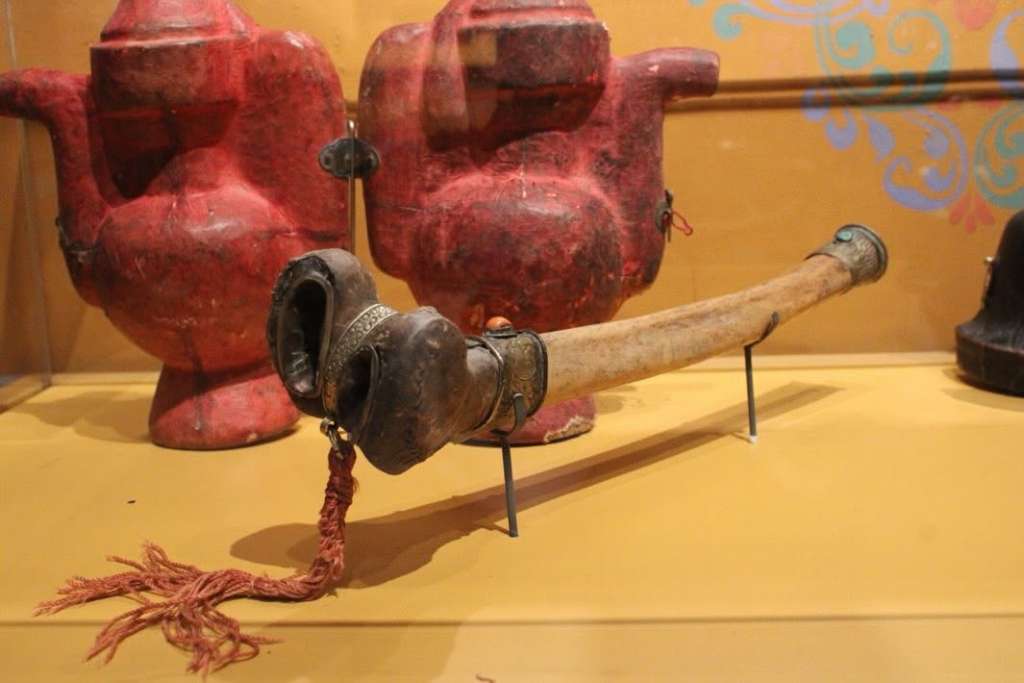
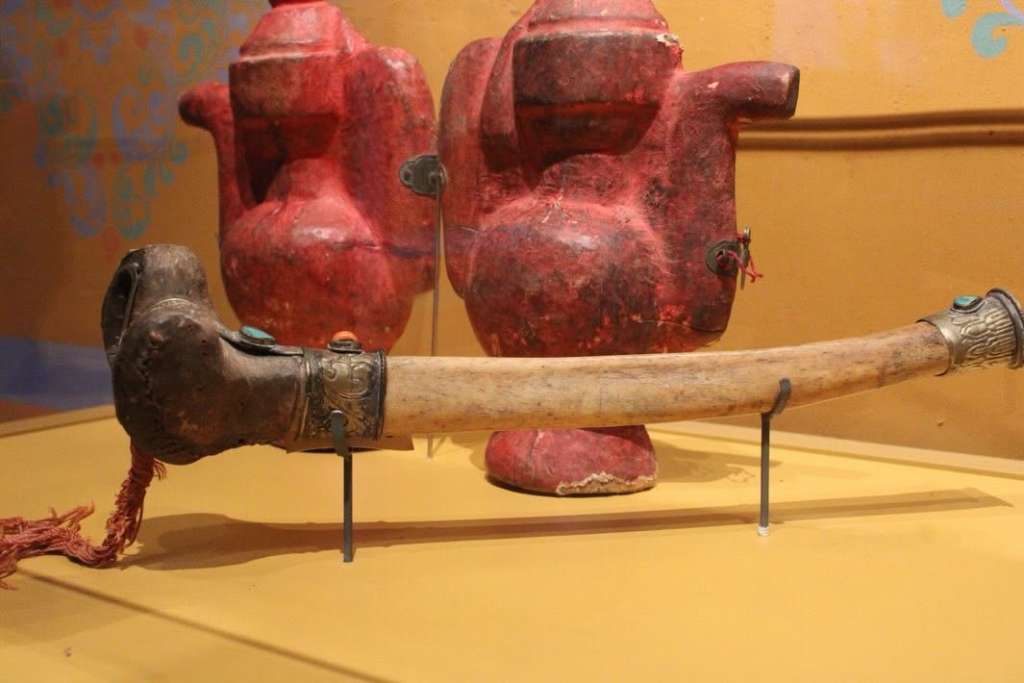
This instrument is marked by the weathered leather wrapped around its wider end. Hand-stitched and worn, it reinforces the fragile bone and keeps it intact over time. By sealing the natural openings of the joint, it concentrates the airflow, sharpening the instrument’s piercing tone. In the worn stitching and the patina of the bone, its physical history remains visible.
𝘐𝘯 𝘵𝘩𝘪𝘴 𝘴𝘦𝘳𝘪𝘦𝘴, 𝘸𝘦 𝘩𝘪𝘨𝘩𝘭𝘪𝘨𝘩𝘵 𝘪𝘯𝘵𝘦𝘳𝘦𝘴𝘵𝘪𝘯𝘨 𝘰𝘣𝘫𝘦𝘤𝘵𝘴 𝘧𝘳𝘰𝘮 𝘰𝘶𝘳 𝘤𝘰𝘭𝘭𝘦𝘤𝘵𝘪𝘰𝘯 𝘢𝘴 𝘸𝘦𝘭𝘭 𝘢𝘴 𝘯𝘰𝘵𝘢𝘣𝘭𝘦 𝘭𝘢𝘯𝘥𝘴𝘤𝘢𝘱𝘦 𝘧𝘦𝘢𝘵𝘶𝘳𝘦𝘴 𝘢𝘳𝘰𝘶𝘯𝘥 𝘵𝘩𝘦 𝘞𝘢𝘯𝘨𝘥𝘶𝘦𝘤𝘩𝘩𝘰𝘦𝘭𝘪𝘯𝘨 𝘗𝘢𝘭𝘢𝘤𝘦, 𝘴𝘩𝘢𝘳𝘪𝘯𝘨 𝘵𝘩𝘦 𝘴𝘵𝘰𝘳𝘪𝘦𝘴 𝘢𝘯𝘥 𝘩𝘦𝘳𝘪𝘵𝘢𝘨𝘦 𝘣𝘦𝘩𝘪𝘯𝘥 𝘵𝘩𝘦𝘮.