

Woodblock printing, or 𝘱𝘢𝘳𝘴𝘩𝘪𝘯𝘨, is a method of reproducing religious texts and images. Carved in reverse, inked, and pressed to create repeated impressions.
This woodblock of Pema Lingpa (1450–1521) is part of the Palace collection. A revered 𝘛𝘦𝘳𝘵ö𝘯, and founder of the Peling tradition of Nyingma, he is associated with the popularization of this technique in Bhutan in the fifteenth century.
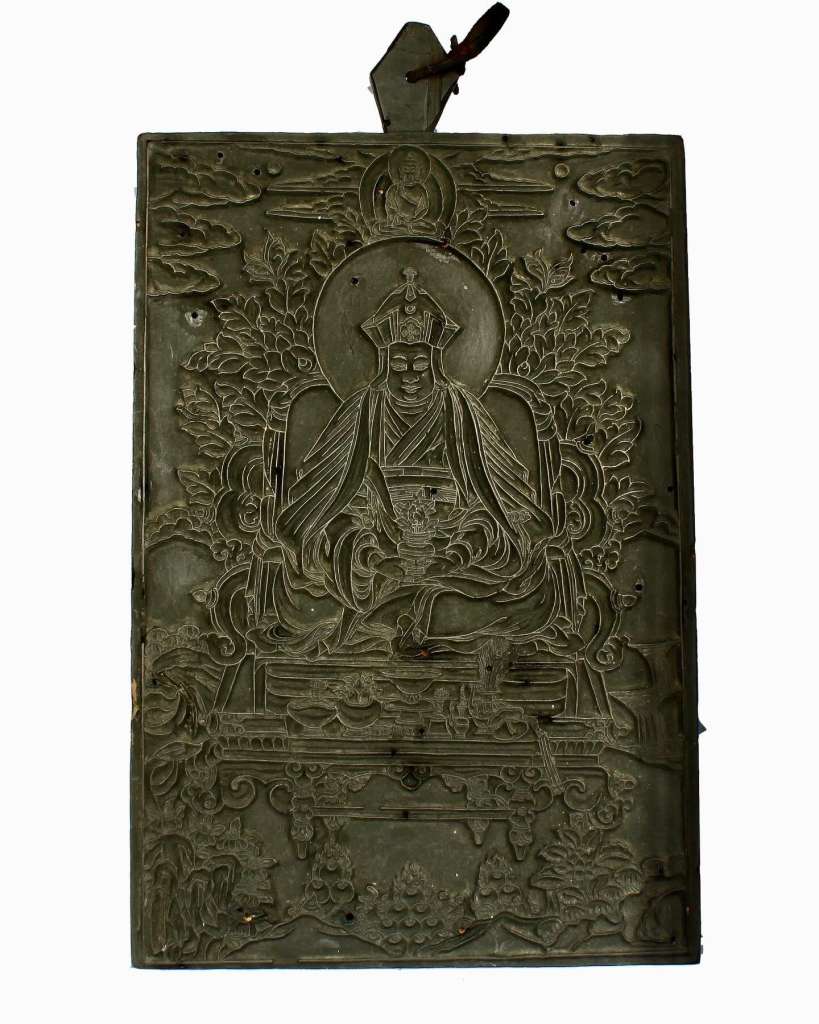
The block depicts Pema Lingpa seated in meditation posture on a lotus throne, framed by floral and ornamental forms. Wear along the raised lines, traces of ink in the grain, and the handle above indicate its sustained use as a working printing tool.
As both image and tool, this object carries a dual significance: it represents Pema Lingpa while also embodying the printing tradition he helped establish, through which religious knowledge and imagery were widely reproduced and transmitted in Bhutan and the greater Himalayan region.
𝘐𝘯 𝘵𝘩𝘪𝘴 𝘴𝘦𝘳𝘪𝘦𝘴, 𝘸𝘦 𝘩𝘪𝘨𝘩𝘭𝘪𝘨𝘩𝘵 𝘪𝘯𝘵𝘦𝘳𝘦𝘴𝘵𝘪𝘯𝘨 𝘰𝘣𝘫𝘦𝘤𝘵𝘴 𝘧𝘳𝘰𝘮 𝘰𝘶𝘳 𝘤𝘰𝘭𝘭𝘦𝘤𝘵𝘪𝘰𝘯 𝘢𝘴 𝘸𝘦𝘭𝘭 𝘢𝘴 𝘯𝘰𝘵𝘢𝘣𝘭𝘦 𝘭𝘢𝘯𝘥𝘴𝘤𝘢𝘱𝘦 𝘧𝘦𝘢𝘵𝘶𝘳𝘦𝘴 𝘢𝘳𝘰𝘶𝘯𝘥 𝘵𝘩𝘦 𝘞𝘢𝘯𝘨𝘥𝘶𝘦𝘤𝘩𝘩𝘰𝘦𝘭𝘪𝘯𝘨 𝘗𝘢𝘭𝘢𝘤𝘦, 𝘴𝘩𝘢𝘳𝘪𝘯𝘨 𝘵𝘩𝘦 𝘴𝘵𝘰𝘳𝘪𝘦𝘴 𝘢𝘯𝘥 𝘩𝘦𝘳𝘪𝘵𝘢𝘨𝘦 𝘣𝘦𝘩𝘪𝘯𝘥 𝘵𝘩𝘦𝘮.