

Below the magnificent Jakar Dzong, in the valley of Wangduechhoeling, a familiar winter visitor is getting ready to leave.
Ruddy Shelducks are scattered across the fields, their saffron-orange tones blending gently with the winter earth, often moving among grazing cattle. After spending the colder months in Bumthang, they will soon begin their journey back across the Himalayas.
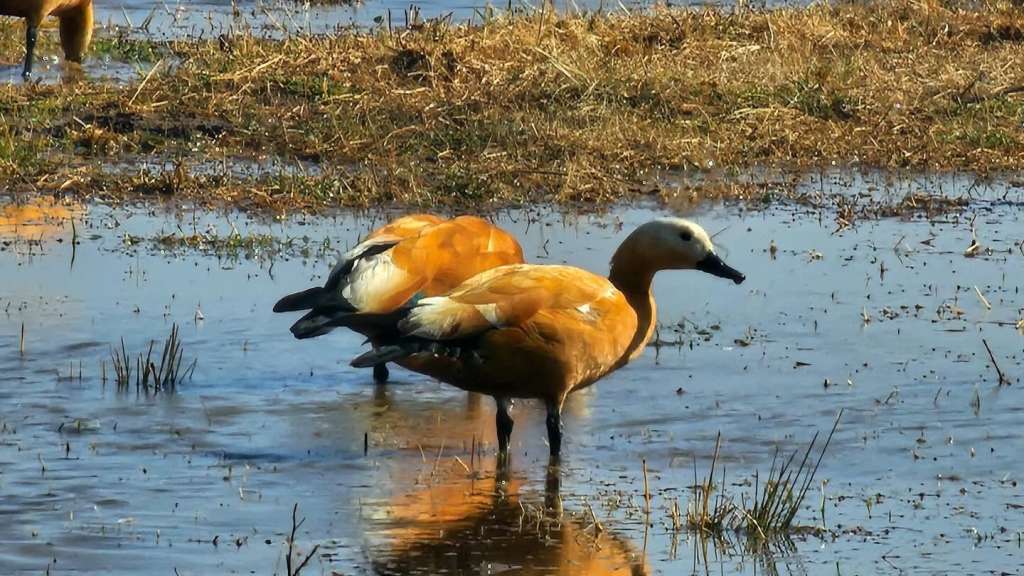
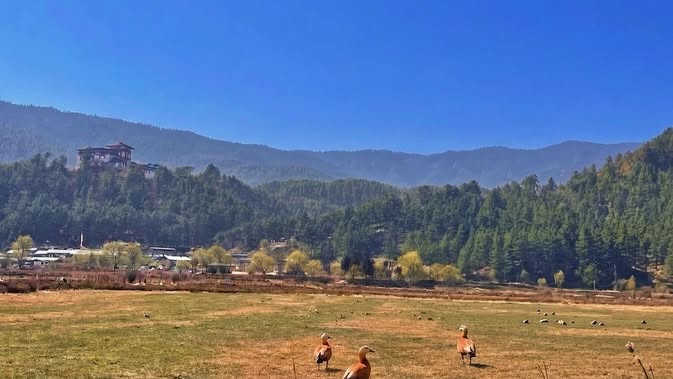
Also known as the Brahminy Duck, this species carries cultural and spiritual associations across Asia. In Himalayan Buddhist traditions, ducks and geese are sometimes linked with teachers and the passing of knowledge. The image of the two-headed duck, connected to the great master Vimalamitra, points to teachings moving across places and languages. They are also seen as symbols of interdependence and harmony with nature. Seen in this light, the Brahminy Duck in Bumthang becomes part of this wider imaginative world, a living presence that invites reflection on movement, connection, and continuity.
Research by Ugyen Wangchuck Institute for Forestry Research and Training shows how far these birds travel. One tracked individual flew as far as Mongolia, covering over 10,000 kilometres, while another reached heights above 7,000 metres. Their routes connect Bhutan to distant rivers, lakes, and wetlands across the region.
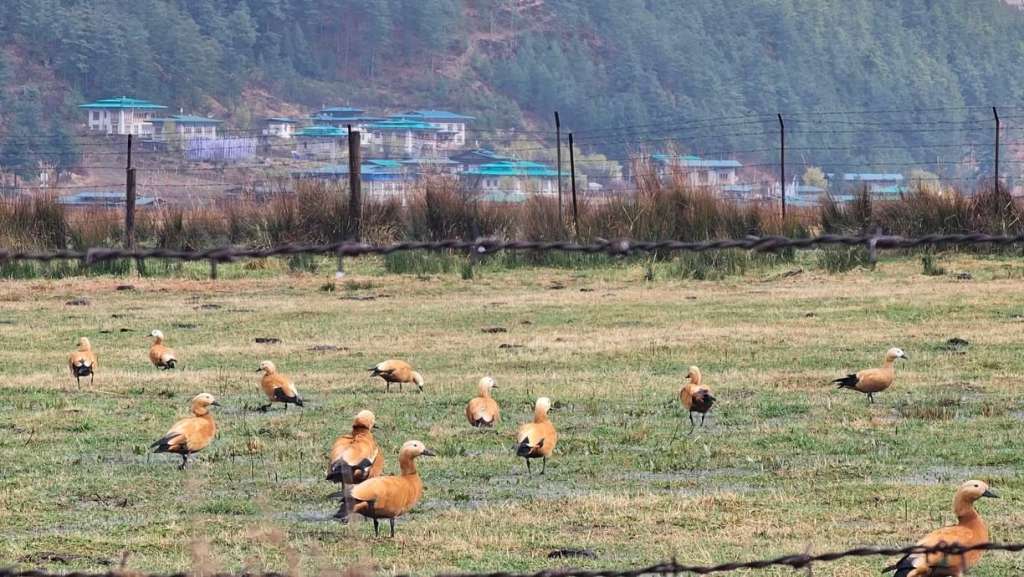
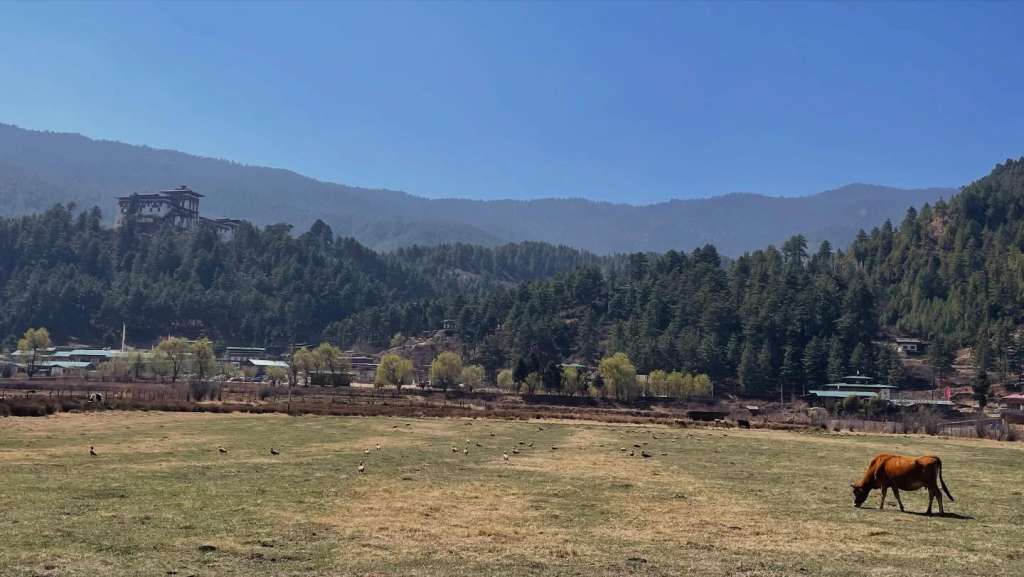
Moving between riverbanks, farmland, and open water, they are part of the everyday landscape here, even as they prepare to move on.
𝘐𝘯 𝘵𝘩𝘪𝘴 𝘴𝘦𝘳𝘪𝘦𝘴, 𝘸𝘦 𝘩𝘪𝘨𝘩𝘭𝘪𝘨𝘩𝘵 𝘪𝘯𝘵𝘦𝘳𝘦𝘴𝘵𝘪𝘯𝘨 𝘰𝘣𝘫𝘦𝘤𝘵𝘴 𝘧𝘳𝘰𝘮 𝘰𝘶𝘳 𝘤𝘰𝘭𝘭𝘦𝘤𝘵𝘪𝘰𝘯 𝘢𝘴 𝘸𝘦𝘭𝘭 𝘢𝘴 𝘯𝘰𝘵𝘢𝘣𝘭𝘦 𝘭𝘢𝘯𝘥𝘴𝘤𝘢𝘱𝘦 𝘧𝘦𝘢𝘵𝘶𝘳𝘦𝘴 𝘢𝘳𝘰𝘶𝘯𝘥 𝘵𝘩𝘦 𝘞𝘢𝘯𝘨𝘥𝘶𝘦𝘤𝘩𝘩𝘰𝘦𝘭𝘪𝘯𝘨 𝘗𝘢𝘭𝘢𝘤𝘦, 𝘴𝘩𝘢𝘳𝘪𝘯𝘨 𝘵𝘩𝘦 𝘴𝘵𝘰𝘳𝘪𝘦𝘴 𝘢𝘯𝘥 𝘩𝘦𝘳𝘪𝘵𝘢𝘨𝘦 𝘣𝘦𝘩𝘪𝘯𝘥 𝘵𝘩𝘦𝘮.