

Guru Rinpoche, also known as Padmasambhava and revered as the Second Buddha, remains central to Bhutan’s spiritual and cultural life. His 8th century visit to Bumthang, at the invitation of King Sindhu, marks a key moment in the establishment of Buddhism in the country. His later visits to Bumthang strengthened this connection, linking the region to some of the earliest foundations of the teachings.
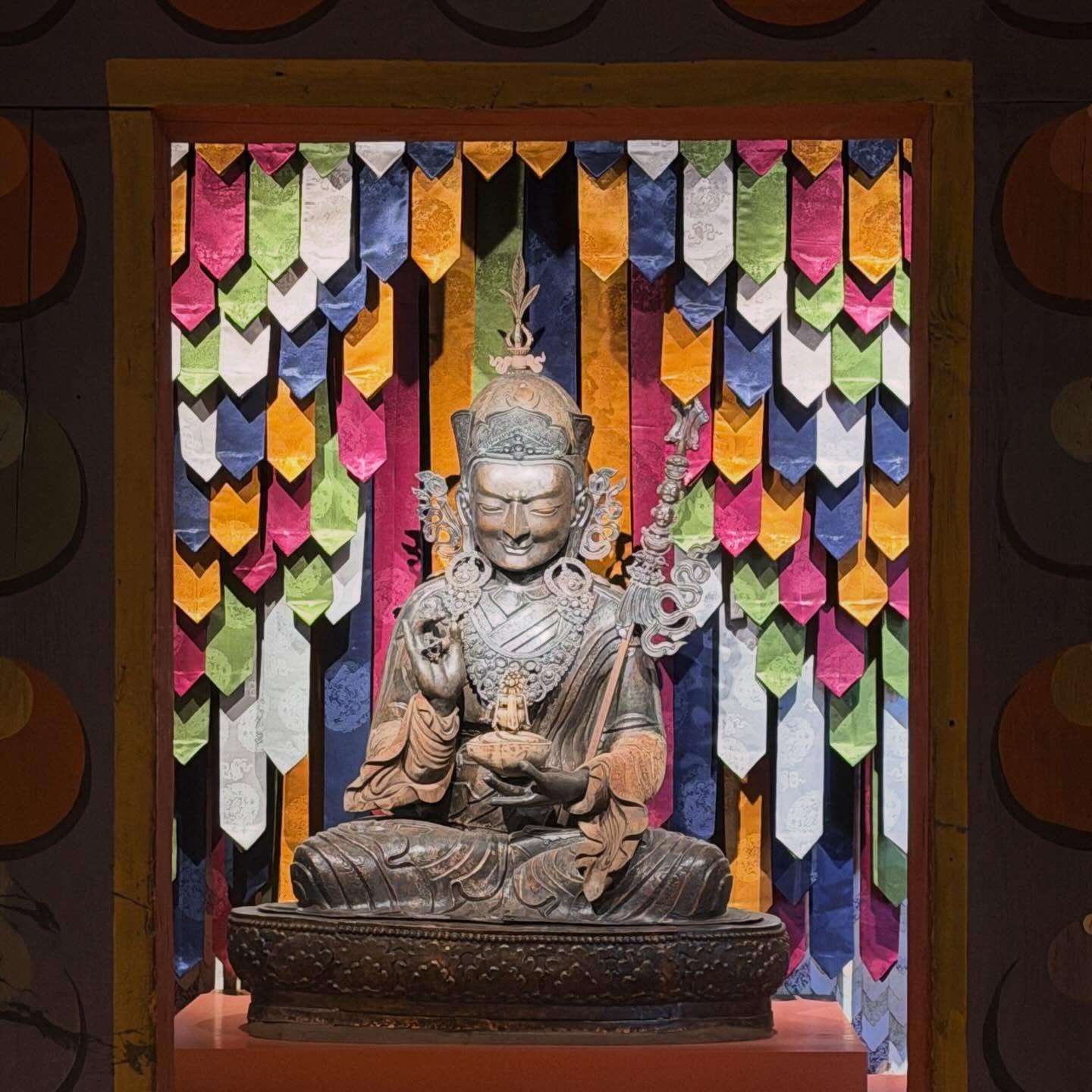
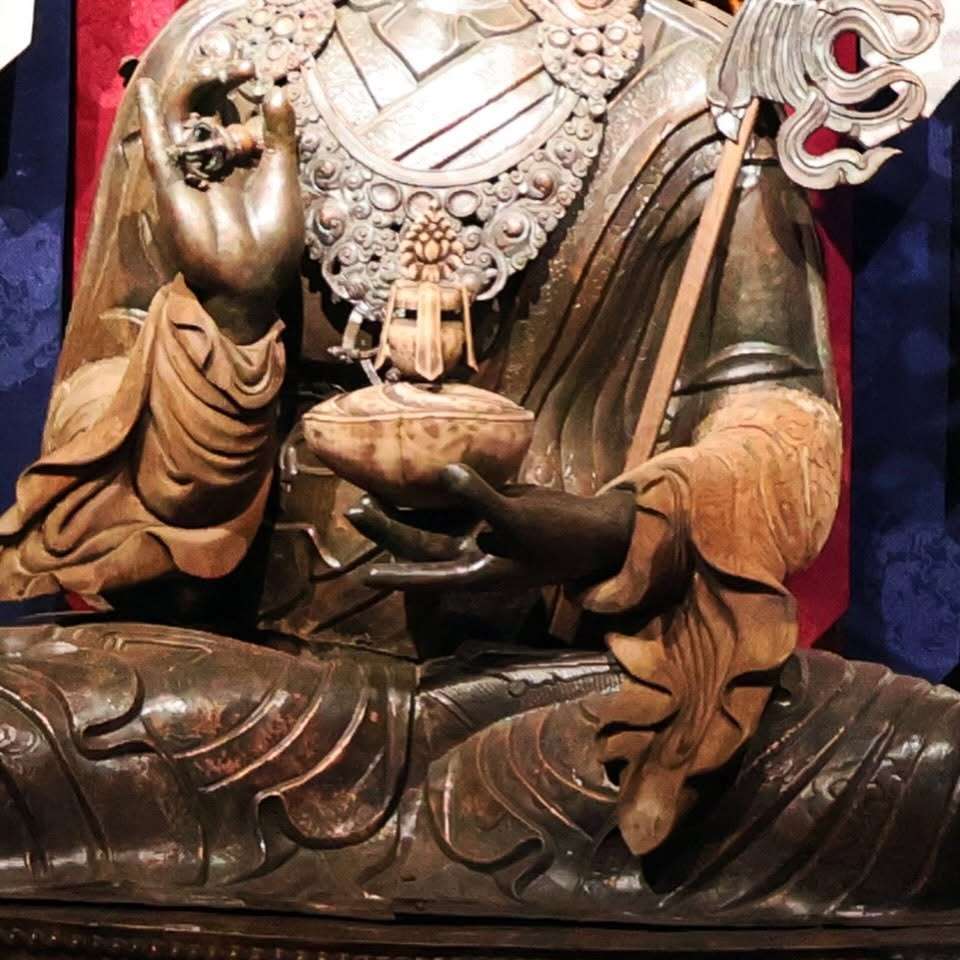
His life is recorded in 𝘗𝘦𝘮𝘢 𝘒𝘢𝘵𝘩𝘢𝘯𝘨, and his influence is expressed through his eight manifestations, each taking form to guide beings and subdue forces that obstruct the path to enlightenment. His teachings were also concealed as 𝘵𝘦𝘳𝘮𝘢, to be revealed by 𝘵𝘦𝘳𝘵ö𝘯𝘴 in later generations.
In our ‘Lotus-Born Gallery’, this large sculpture of Guru Rinpoche from the Palace collection brings that connection into view. In his manifestation as Tshokey Dorji, he holds the vajra and skull cup, with the 𝘬𝘩𝘢𝘵𝘷𝘢𝘯𝘨𝘢 staff at his shoulder. His expression is gentle, with a faint, almost knowing smile that visitors have lovingly come to call “the Smiling Guru.”
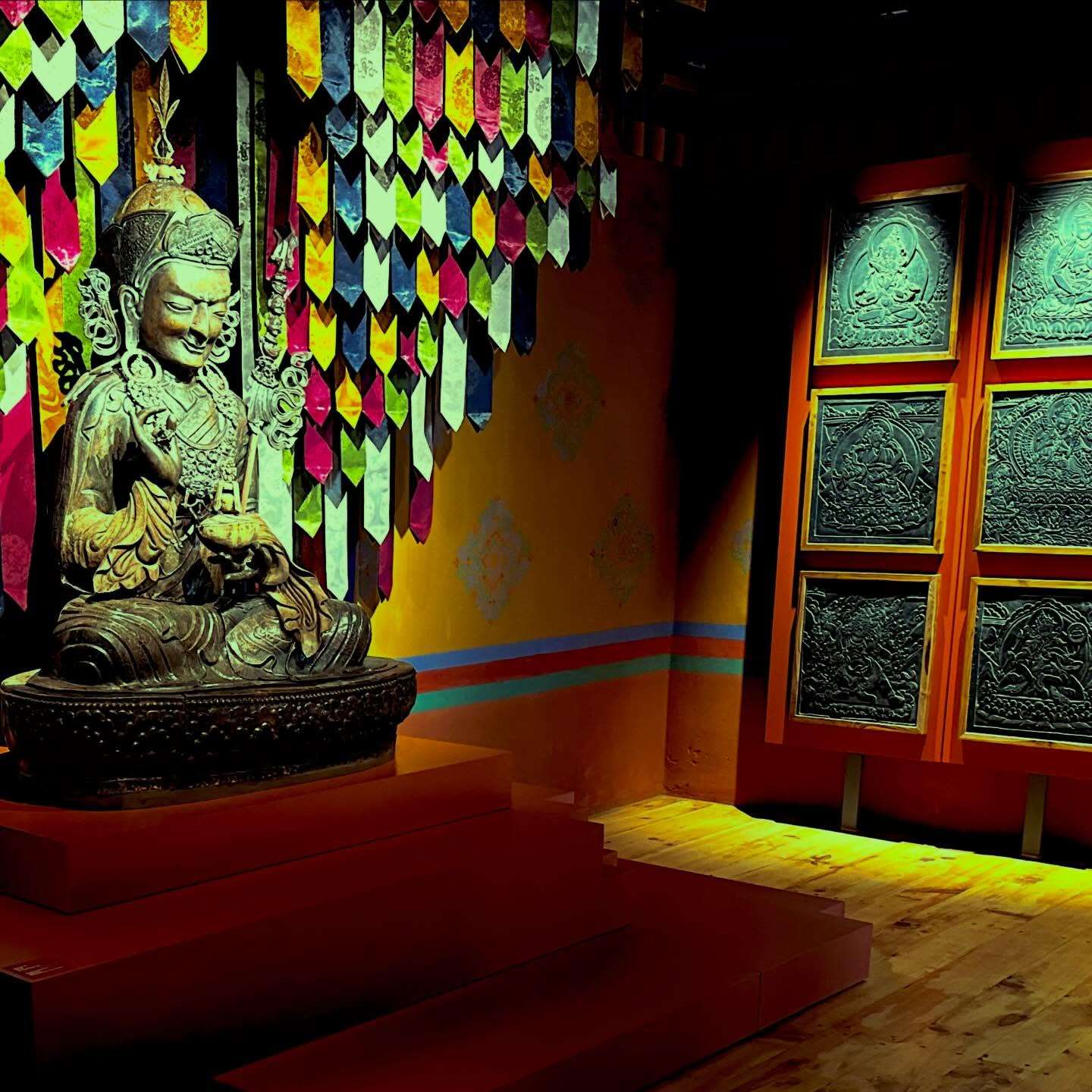
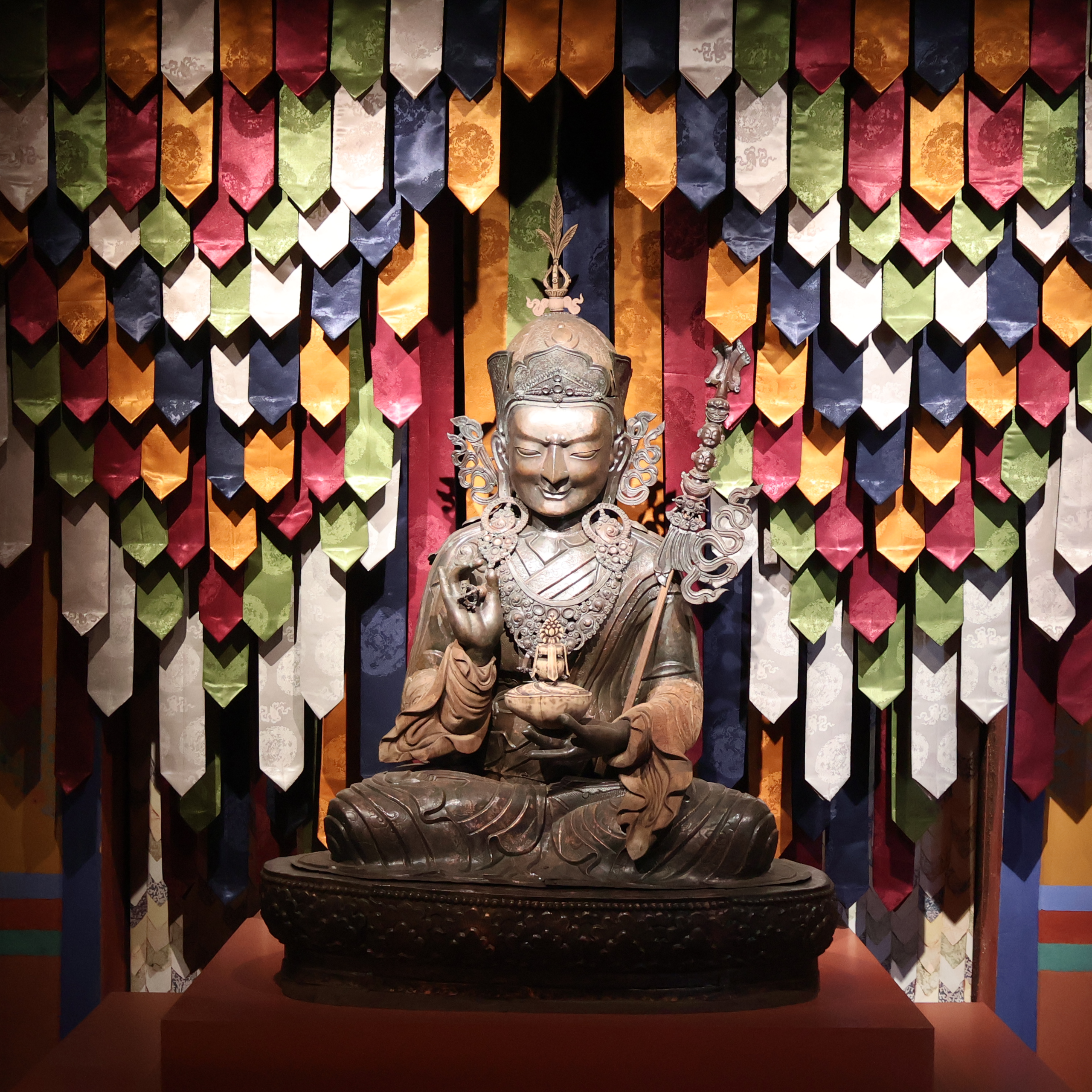
The sculpture has been carefully conserved. Missing elements were recreated by skilled artisans, with new materials intentionally distinct from the original.
If you met Guru Rinpoche in person, do you think he would be smiling at you?
𝘐𝘯 𝘵𝘩𝘪𝘴 𝘴𝘦𝘳𝘪𝘦𝘴, 𝘸𝘦 𝘩𝘪𝘨𝘩𝘭𝘪𝘨𝘩𝘵 𝘪𝘯𝘵𝘦𝘳𝘦𝘴𝘵𝘪𝘯𝘨 𝘰𝘣𝘫𝘦𝘤𝘵𝘴 𝘧𝘳𝘰𝘮 𝘰𝘶𝘳 𝘤𝘰𝘭𝘭𝘦𝘤𝘵𝘪𝘰𝘯 𝘢𝘴 𝘸𝘦𝘭𝘭 𝘢𝘴 𝘯𝘰𝘵𝘢𝘣𝘭𝘦 𝘭𝘢𝘯𝘥𝘴𝘤𝘢𝘱𝘦 𝘧𝘦𝘢𝘵𝘶𝘳𝘦𝘴 𝘢𝘳𝘰𝘶𝘯𝘥 𝘵𝘩𝘦 𝘞𝘢𝘯𝘨𝘥𝘶𝘦𝘤𝘩𝘩𝘰𝘦𝘭𝘪𝘯𝘨 𝘗𝘢𝘭𝘢𝘤𝘦, 𝘴𝘩𝘢𝘳𝘪𝘯𝘨 𝘵𝘩𝘦 𝘴𝘵𝘰𝘳𝘪𝘦𝘴 𝘢𝘯𝘥 𝘩𝘦𝘳𝘪𝘵𝘢𝘨𝘦 𝘣𝘦𝘩𝘪𝘯𝘥 𝘵𝘩𝘦𝘮.