

Exhibitions & Galleries
A Journey Through Bhutan’s Sacred Art and Royal Legacy
Permanent Exhibitions
Twenty-seven permanent galleries unfold through the historic rooms of Wangduechhoeling Palace. Together they trace Bhutan’s spiritual and political formation, the birth of the Wangchuck dynasty, the workings of royal life, and the skills, beliefs, and memories held in the palace collection. The journey moves from myth and statecraft to intimate rooms, sacred objects, oral histories, household tools, and textiles.
Audio visual Gallery: Introduction Film
An introduction film to Bumthang, the Wangchuck dynasty, and the making of Wangduechhoeling Palace. It follows the palace from Jigme Namgyel’s rise and the reigns of the first Kings to its careful restoration as a museum and cultural centre. The film gives visitors the historical and architectural bearings for the galleries ahead.
Early History of Bhutan
Bhutan’s early history unfolds through an interactive touch table. The story begins with indigenous beliefs and the first Buddhist temples, then moves through Guru Rinpoche, Pema Lingpa, the spread of Buddhist schools, and Zhabdrung Ngawang Namgyel’s unification of the country.
Dual Governance and Zhabdrung
This gallery examines two decisive stages in Bhutan’s political formation. Zhabdrung Ngawang Namgyel’s introduction of Choesi Nyidhen joined religious and secular authority within a dual system, symbolised by a white silk scarf knotted over a golden yoke. His Nga Chudruma seal expressed spiritual authority and state power through the “Sixteen Is”
Becoming Bhutan
The Duars linked Bhutan to the plains of Bengal and Assam through trade, taxation, diplomacy, and conflict. Records and historical images recount the Duar War of 1864-65 and the Treaty of Sinchula, which ended Bhutanese control of these fertile borderlands. The gallery places the war within the wider region of British imperial expansion and Bhutan’s effort to protect its independence.
Jigme Namgyel and Arms & Armoury
Swords, bows, arrows, firearms, armour, and campaign equipment open a view onto nineteenth-century warfare in Bhutan. Success depended on terrain, timing, concealment, and the labour of porters and attendants as much as on weapons. Jigme Namgyel’s military skill and political judgement carried him from the court of Trongsa to a commanding role in the consolidation of the country.
The Kings of Bhutan
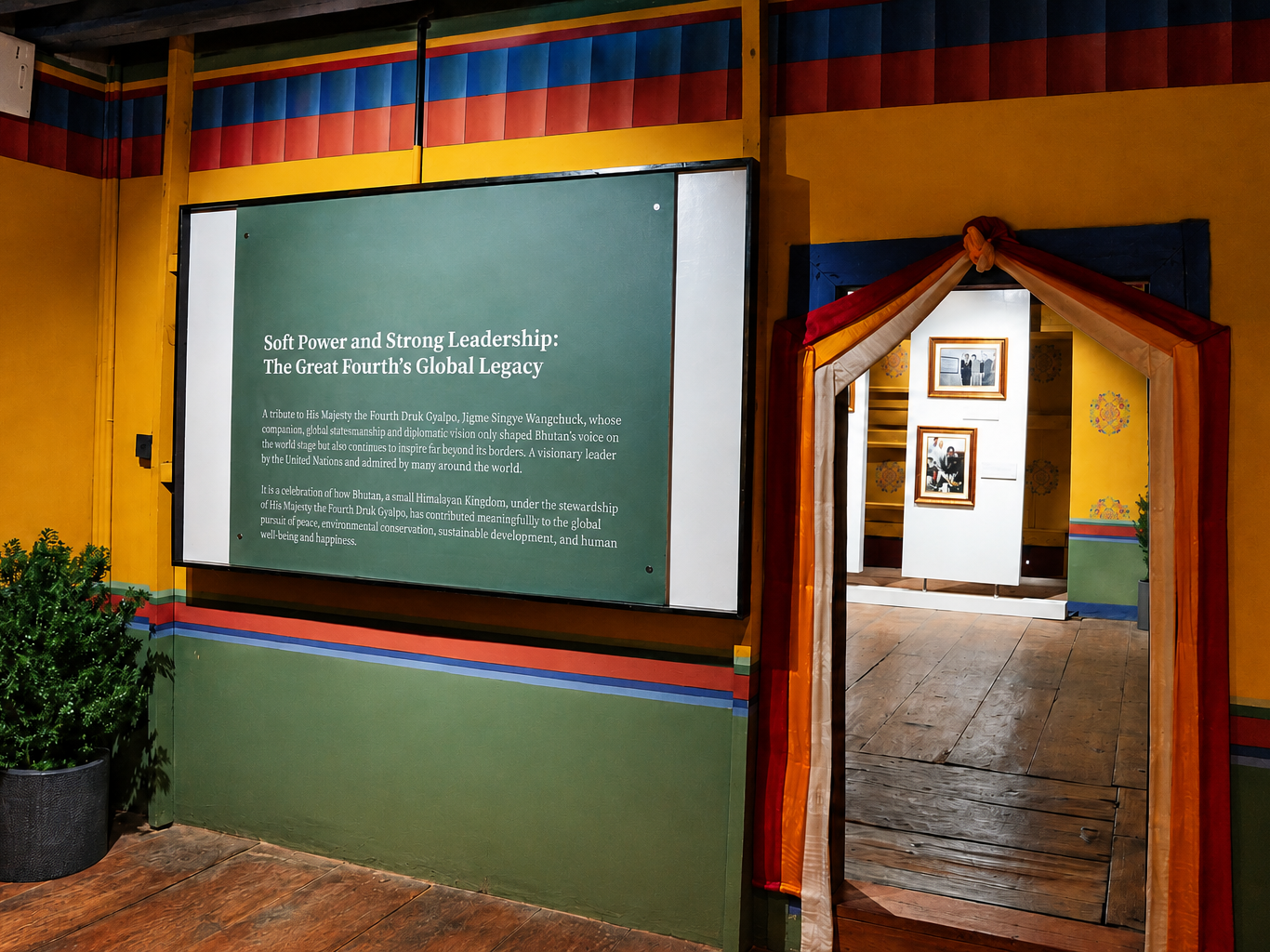
Set within the ancestral palace of the Wangchuck dynasty, this gallery honors Bhutan’s five Kings and over a century of visionary leadership. From 1907 to the modern era, explore a legacy rooted in Gross National Happiness, tradition, and the sacred bond between the Sovereign and the people.
The Queens of Bhutan
The Queens of Bhutan have shaped national life through faith, counsel, patronage, and public service. This gallery traces their changing roles from the early years of hereditary monarchy to the present, when royal patronage extends across education, health, the environment, women’s welfare, youth, and cultural preservation. Their patronage has also sustained Buddhist institutions and Bhutan’s textile traditions, helping preserve knowledge and skills across generations.
The Royal Collection
Ceremonial pieces, personal belongings, and objects of daily use carry the imprint of life inside the palace. Some were made in Bhutan; others arrived through travel, diplomacy, and exchange.
Royal Lineage and Photographic Memory
A royal family tree sits beside portraits and photographs from Wangduechhoeling, Bumthang, festivals, journeys, and family occasions. The gallery follows the Wangchuck lineage through both public history and family memory.
The King’s Antechamber
Clerks, attendants, and officials gathered here before entering the King’s chamber. Letters were written, reports prepared, seals applied, and instructions passed through the Palace. Audio visuals bring back to life the working atmosphere of the palace administration.
The King’s Chamber
The King’s private chamber was a place of rest, duty, worship, and reflection. Its reconstructed setting evokes the furnishings and personal objects used by the Kings who resided at Wangduechhoeling, while the shrine honours traditions of daily prayer, and devotion to royal guardian deities and root teachers. Together, they speak to the sacred responsibilities of kingship, grounded in faith, discipline, and service.
The Royal Treasury
The Royal Treasury held valuable goods presented to the King. Textiles, jewellery, food, drink, and other offerings moved through the palace as signs of respect and loyalty. The treasury shows how gifts helped organise relationships between the court, religious figures, officials, and communities.
Paper Records
Before money circulated widely, taxes reached the palace as grain, butter, cloth, livestock, labour, and other local products. Receipts, seals, coins, writing tools, and handwritten letters record the movement of these obligations. The Wangduechhoeling archive includes 400 nineteenth-century letters to Jigme Namgyel, preserving the practical language of governance across distant regions.
Religious Imagery
Sacred images brought painters, sculptors, woodcarvers, metalworkers, papermakers, and textile makers into a shared process. The objects in this room retain the marks of those skills, from prepared surfaces and pigments to carving, casting, stitching, and assembly. Some were made for long use; others belonged to rituals with a brief material life.
The Lotus Born
Guru Rinpoche, the Lotus Born, shaped the religious history of Bumthang and Bhutan through his teachings, journeys, and eight manifestations. An early twentieth-century sculpture from the Wangduechhoeling collection anchors the room. Its conservation leaves original and replaced elements distinguishable, allowing the sculpture’s devotional history and its later care to remain visible.
Sacral Objects
Ritual objects gave form to protection, healing, offering, and the removal of harmful influences. Wooden sokpar moulds shaped dough effigies, while vessels, instruments, and symbolic implements supported ceremonies for deities and local guardians. Worn edges, darkened surfaces, and repairs record repeated use within the palace and the surrounding community.
Sound of Remembrance
Voices carry parts of Wangduechhoeling’s history that were never written down. Songs, poems, and recorded memories recall the Royal Family, palace workers, festivals, journeys, and life in Bumthang. The room offers a place to sit and listen as memory shifts between personal experience, inherited story, and public history.
Prayer Printing Blocks
Carved woodblocks brought sacred words into everyday devotional life. Prayers and Buddhist teachings were printed on paper for scriptures, and on cloth for prayer flags and consecration scrolls placed inside statues and stupas. The gallery reveals how printing allowed blessings to be read, transported, and preserved within sacred objects.
The Great Fair
First held in 1937, the Wangduechhoeling Fair became one of Bumthang’s most important annual gatherings. For a week, the palace grounds brought together people from across Bhutan, Tibet, and India in a shared space of trade and celebration. This gallery reimagines the fair through an animation inspired by traditional Bhutanese mural painting, offering a vivid impression of its atmosphere and place in community life.
People of the Palace
Life at Wangduechhoeling was sustained by a complex community of courtiers, attendants, artisans, soldiers, musicians, astrologers, cooks, porters, and others in royal service. Their duties followed established ranks, codes of dress, and strict palace etiquette, while their labour supported the household through daily life, ceremony, travel, and seasonal migration. Through objects, and oral histories, this gallery reveals the skills, discipline, and service that shaped the life of the palace.
Travelling Shrines
At the centre of this gallery is the Tashi Gomang, the travelling shrine of “many auspicious doors”, whose layered compartments open to reveal a miniature sacred world. Travelling monks used such shrines, together with thangkas and recitation, to teach Buddhist stories to people far from monastic centres.
The Bhutanese Household
Household objects reveal how Bhutanese life was shaped by farming, pastoral work, and the intelligent use of local materials. Enamel, porcelain, and glass entered the household through travel and trade. Measures, storage vessels, farm tools, and domestic objects show how local making adapted to new materials while retaining established forms and uses.
The Palace Kitchen
Food at Wangduechhoeling was prepared across separate kitchens for the royal household, guests, and the wider palace community. Cooking vessels, storage containers, and serving ware reveal the scale of this work, while detailed serving customs show how hospitality was governed by care, hierarchy, and precision.
The Granary
Large quantities of agricultural produce were stored in the granary on the ground floor. The room links the palace to the fields, taxes, transport networks, and seasonal labour that kept a large household fed.
The Warp and the Weft
Textiles served as clothing, wealth, tax, offering, inheritance, and gift. Garments, belts, scarves, and accessories show how dress marked region, status, gender, and occasion. The gallery also follows shifts in fashion and production under the Wangchuck dynasty, with weaving remaining a major field of women’s skill, income, and creative judgement.
Household Textiles
Sheep wool, and yak wool cloth, woven bags, wraps, rain capes, bedding, and floor coverings met the practical needs of life in Bumthang. Their fibers and structures were chosen for warmth, strength, and water resistance. Utility and visual pleasure sit comfortably together in these textiles, shaped by knowledge of material and use.
Temporary/Special Exhibitions
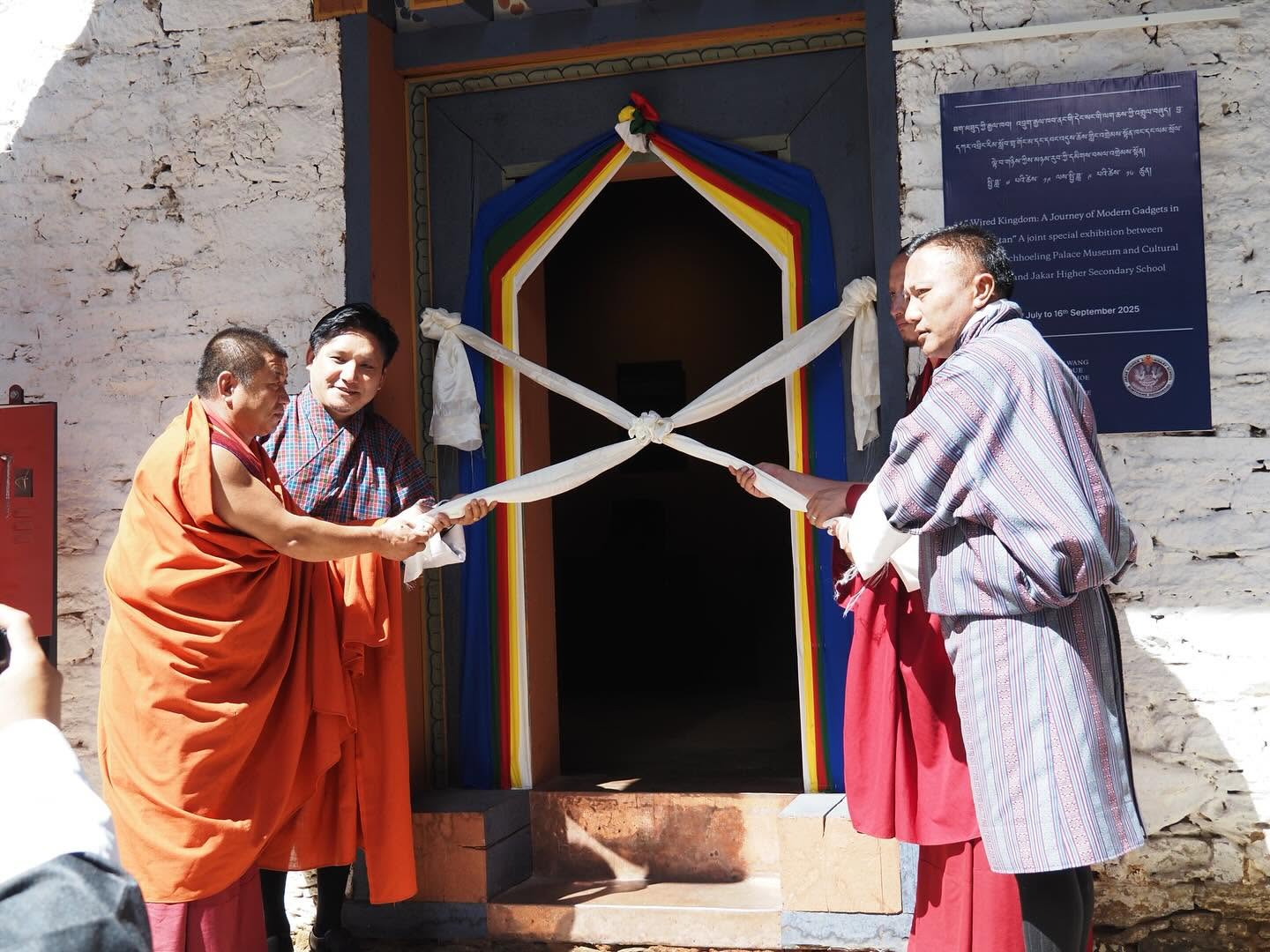
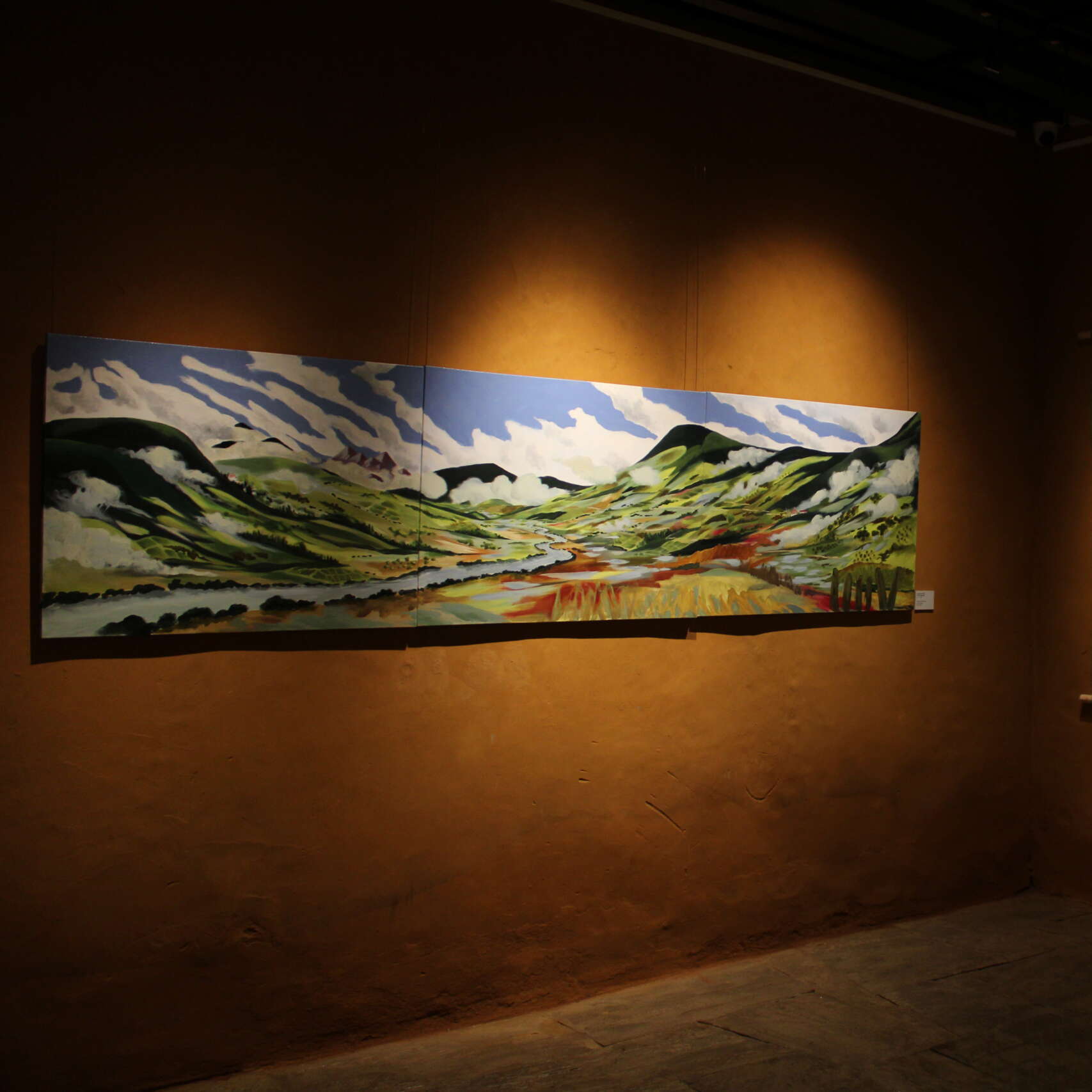
The temporary galleries at Wangduechhoeling Palace Museum & Cultural Centre present changing exhibitions across contemporary art, design, culture, and ideas, offering a platform for new work, creative exchange, and public engagement.
We currently do not have a temporary or special exhibition on display. Please check back soon for upcoming announcements, or explore our past exhibitions.
Operating Hours
-
Monday - Saturday
9:30 AM – 4:30 PM
-
Please check with us in advance regarding opening hours on public holidays.
Support Us
Help us protect Bhutan’s royal heritage for generations to come. Your contribution supports ongoing restoration, artifact conservation, and cultural education programs at the palace.